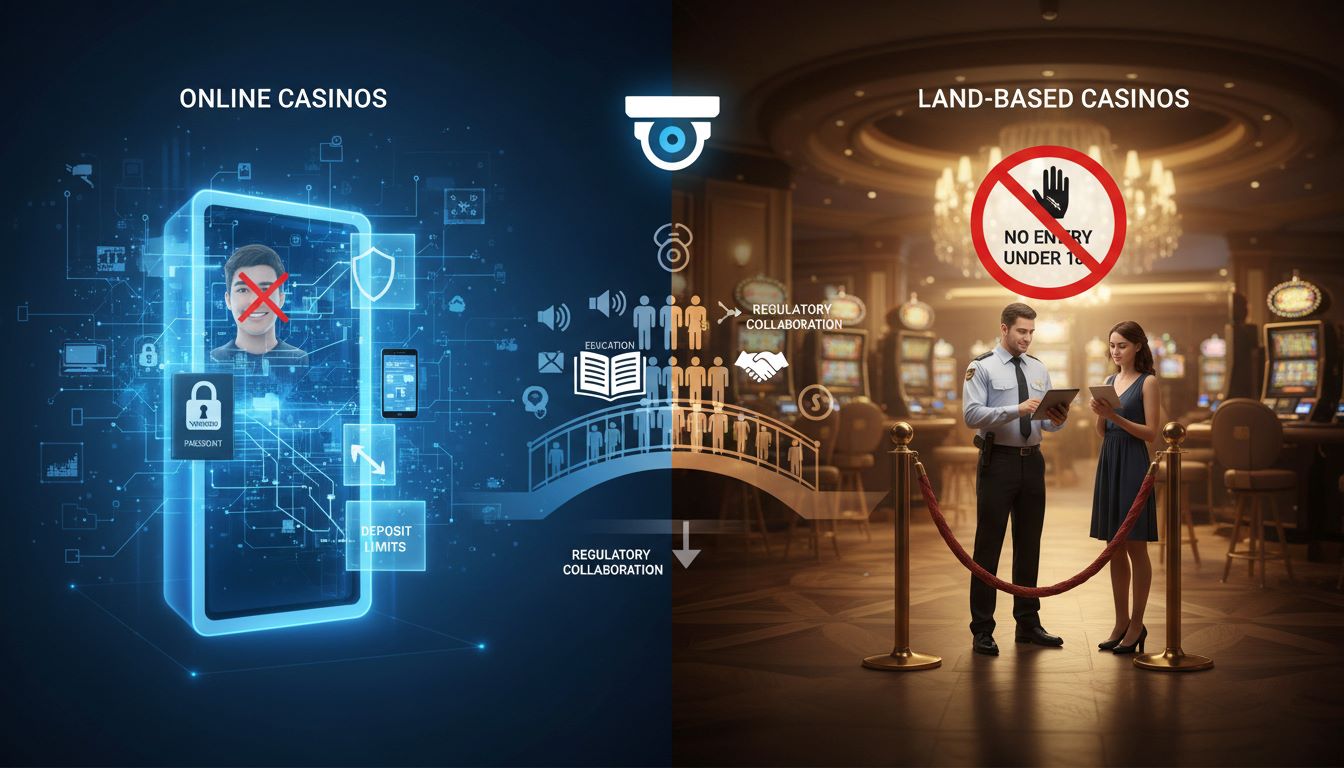
How casinos prevent underage gambling
South Africa maintains stringent regulations to protect minors from the harmful effects of gambling, with casinos serving as the first line of defense. The National Gambling Act of 2004 established a comprehensive framework requiring all gambling establishments to implement robust age verification systems and prevention measures. These protective measures are not merely legal obligations but represent a commitment to responsible gaming that safeguards young people from developing gambling addictions.
The gambling industry in South Africa recognizes that underage gambling can lead to severe financial, psychological, and social consequences for young people and their families. Casino operators work closely with regulatory bodies to ensure compliance while fostering a culture of responsible gambling that extends beyond their gaming floors into community education and awareness programs.
Legal Framework and Regulatory Requirements
The foundation of underage gambling prevention in South Africa rests on a robust legal framework that clearly defines responsibilities and consequences. The National Gambling Act establishes 18 years as the minimum legal gambling age and empowers provincial gambling boards to enforce these regulations through regular inspections and compliance monitoring.
Provincial gambling boards possess extensive authority to investigate violations, impose penalties, and revoke licenses for non-compliance. These regulatory bodies conduct surprise inspections, review surveillance footage, and audit casino records to ensure age verification procedures are consistently followed. Penalties for violations can include substantial fines, temporary closures, or permanent license revocation.
Penalties and Enforcement Measures
South African gambling regulations impose severe consequences on establishments that fail to prevent underage gambling. First-time violations typically result in formal warnings and mandatory staff retraining, while repeat offenses can trigger fines ranging from R50,000 to R500,000. Casinos that demonstrate systematic failures in age verification may face license suspension or complete revocation.
The regulatory framework also holds individual employees accountable, with gaming staff facing personal fines and potential criminal charges for knowingly allowing minors to gamble. This dual approach ensures both institutional and individual responsibility in maintaining age restrictions.
Provincial Variations and Implementation
While the National Gambling Act provides overarching guidelines, each province implements specific regulations tailored to local circumstances. Gauteng Province, home to numerous large casinos, maintains particularly strict monitoring systems with mandatory incident reporting within 24 hours of any underage gambling attempt.
The Western Cape emphasizes technology-based solutions, requiring casinos to implement digital age verification systems at all gaming machine areas. These provincial variations demonstrate the flexibility within South Africa’s regulatory framework while maintaining consistent protection standards nationwide.
Age Verification Systems and Technologies
Modern South African casinos employ sophisticated age verification technologies that go far beyond simple ID checks at entrances. These systems create multiple verification points throughout the gaming environment, ensuring that minors cannot access gambling facilities even if they bypass initial security measures.
| Verification Method | Technology Used | Effectiveness Rating | Implementation Cost |
|---|---|---|---|
| Smart Card Entry | RFID with biometric data | 95% | High |
| Digital ID Scanning | OCR and database verification | 88% | Medium |
| Facial Recognition | AI-powered cameras | 92% | Very High |
| Manual ID Check | Trained security personnel | 75% | Low |
Biometric and Smart Card Systems
Leading South African casinos have implemented biometric verification systems that combine fingerprint scanning with facial recognition technology. These systems create unique digital profiles for verified adult patrons, enabling seamless re-entry while maintaining strict age controls. Smart card technology integrates with national identity databases to verify age and identity simultaneously.
The integration of biometric data with gaming machines represents the cutting edge of underage prevention technology. Players must verify their identity through fingerprint or facial recognition before activating any gaming device, creating an virtually impenetrable barrier against underage gambling attempts.
Database Integration and Real-Time Verification
Modern verification systems connect directly to government databases, enabling real-time validation of identity documents and immediate detection of fraudulent IDs. This integration allows casinos to identify expired documents, detect altered identification, and cross-reference patron information against national records within seconds.
Advanced systems also maintain shared databases among casino operators, preventing minors who have been previously identified and banned from gaining access to other gambling establishments. This collaborative approach strengthens the entire industry’s defense against underage gambling attempts.
Staff Training and Identification Procedures
Comprehensive staff training forms the backbone of effective underage gambling prevention in South African casinos. All gaming floor personnel undergo rigorous certification programs that cover legal requirements, identification techniques, and proper response procedures when encountering potential minors.
Training programs emphasize the importance of maintaining vigilance throughout shifts, as young people may attempt to enter gaming areas after bypassing initial security checks. Staff members learn to recognize signs of nervousness, unusual behavior patterns, and physical characteristics that may indicate underage individuals attempting to gamble.
Ongoing Education and Certification Requirements
South African casino employees must complete annual recertification programs to maintain their gaming licenses. These programs update staff on new identification technologies, evolving fraud techniques, and changes in regulatory requirements. Regular training sessions include practical exercises in ID verification and scenario-based learning to prepare staff for real-world situations.
Supervisors receive additional training in conflict resolution and de-escalation techniques, preparing them to handle situations where young people become upset or aggressive when denied access to gambling areas. This specialized training ensures that enforcement actions are conducted professionally while maintaining casino security.
Physical Security Measures and Access Controls
South African casinos implement multi-layered physical security systems designed to prevent underage individuals from accessing gaming areas through any entry point. These comprehensive measures include controlled access points, surveillance systems, and strategic placement of security personnel throughout gaming facilities.
- Mandatory ID checks at all casino entrances with dedicated verification stations
- Separate gaming floor entrances with additional age verification requirements
- Physical barriers separating gaming areas from entertainment and dining venues
- Roving security patrols conducting spot checks throughout gaming floors
- Emergency response protocols for situations involving minors on gaming premises
- Coordinated security communication systems linking all verification points
Surveillance and Monitoring Systems
Advanced surveillance networks monitor all gaming areas continuously, with specialized cameras capable of facial recognition and age estimation. Security personnel in central monitoring rooms receive alerts when the system identifies potentially underage individuals, enabling immediate intervention before gambling activity begins.
These monitoring systems integrate with access control databases to track patron movements throughout the facility. When an individual’s age verification status changes or expires, the system automatically flags their presence and directs security personnel to their location for re-verification or escort from gaming areas.
Emergency Response and Incident Management
Casinos maintain detailed incident response protocols for situations involving underage gambling attempts or violations. These procedures include immediate patron removal, documentation requirements, regulatory notification timelines, and follow-up investigation processes to prevent similar occurrences.
Security teams coordinate with local law enforcement when necessary, particularly in cases involving fraudulent identification or repeated violation attempts. This collaboration strengthens the overall effectiveness of underage gambling prevention while ensuring appropriate legal consequences for serious violations.
Collaboration with Parents and Educational Institutions
South African casinos recognize that preventing underage gambling requires community-wide cooperation extending beyond their facilities. Many establishments partner with schools, parent organizations, and youth groups to educate young people about gambling risks and promote responsible decision-making regarding gaming activities.
Educational outreach programs bring casino representatives into schools to discuss the realities of gambling, including the mathematical disadvantages players face and the potential for addiction development. These presentations emphasize that casinos are adult entertainment venues with serious consequences for those who develop gambling problems.
Parent Education and Communication Initiatives
Casino operators work with parent groups to provide educational resources about recognizing signs of underage gambling and preventing access to gaming activities. These programs help parents understand how young people might attempt to circumvent age restrictions and provide strategies for maintaining open communication about gambling risks.
Some casinos offer family counseling resources and referral services for parents dealing with underage gambling issues. These support systems acknowledge that prevention sometimes fails and provide pathways for addressing problems when they occur within families.
Technology Integration and Digital Solutions
The digital revolution has transformed underage gambling prevention in South African casinos, with sophisticated systems now capable of identifying potential minors before they reach gaming floors. Machine learning algorithms analyze facial features, body language, and behavioral patterns to flag individuals who may be attempting to circumvent age restrictions.
Mobile applications connected to casino security systems allow staff members to instantly verify patron ages and access violation histories from anywhere within the facility. These tools enable rapid response to potential underage gambling situations and ensure consistent enforcement across all gaming areas.
Artificial Intelligence and Predictive Analytics
Advanced AI systems analyze patron behavior patterns to identify individuals who may be using fraudulent identification or attempting to help minors access gaming areas. These predictive analytics tools flag suspicious activities such as unusual entry patterns, document inconsistencies, or coordination between multiple individuals that might indicate organized attempts to circumvent age restrictions.
The integration of artificial intelligence with existing surveillance systems creates a comprehensive monitoring network that operates continuously without human fatigue or attention lapses. This technology serves as a force multiplier for human security personnel, directing their attention to situations requiring immediate intervention.
Mobile Technology and Real-Time Communication
Security teams utilize mobile communication platforms that instantly share information about potential violations across all casino departments. When suspicious activity is detected, alerts reach relevant personnel within seconds, enabling coordinated responses that prevent underage individuals from accessing gaming areas through alternative routes.
These communication systems also facilitate real-time updates to patron databases, ensuring that individuals who have been identified as minors attempting to gamble are immediately flagged at all casino locations. This networked approach creates a comprehensive defense system that extends beyond individual establishments to protect the entire gaming industry.